There is nothing quite like the first sharp frost across Kent to remind us how much we rely on our central heating. Yet for many households in Dartford, Bexleyheath, and Gravesend, the boiler spends most of the summer switched off or running solely for hot water. When autumn rolls in and the thermostat gets dialled up, sudden demands on idle components can catch you off guard.
Taking an hour on an autumn weekend to prepare your heating system helps you spot niggles before freezing temperatures arrive, avoids costly emergency call-outs, and ensures you are not paying more for fuel than you need to. Here is our practical, step-by-step checklist to get your home warm and winter-ready.
1. Run an Early Test Run
Do not wait until the first sub-zero evening to discover your boiler will not fire up. In early to mid-autumn, turn your room thermostat up higher than the current room temperature so the system calls for heat.
Let the heating run for roughly 30 to 45 minutes and observe:
- Does the boiler fire smoothly without unusual whistling, banging, or rumbling noises?
- Do the circulating pump and motorised valves switch on promptly?
- Are all radiators across the house starting to warm up from bottom to top?
If you hear gurgling, or if the boiler locks out with an error code on the digital display, you now have plenty of time to address it before local heating engineers are booked solid during the first freeze.
2. Check Water Pressure and Inspect Radiators
Your boiler needs the right amount of sealed system pressure to push hot water through pipework, especially to upstairs bedrooms and loft conversions.
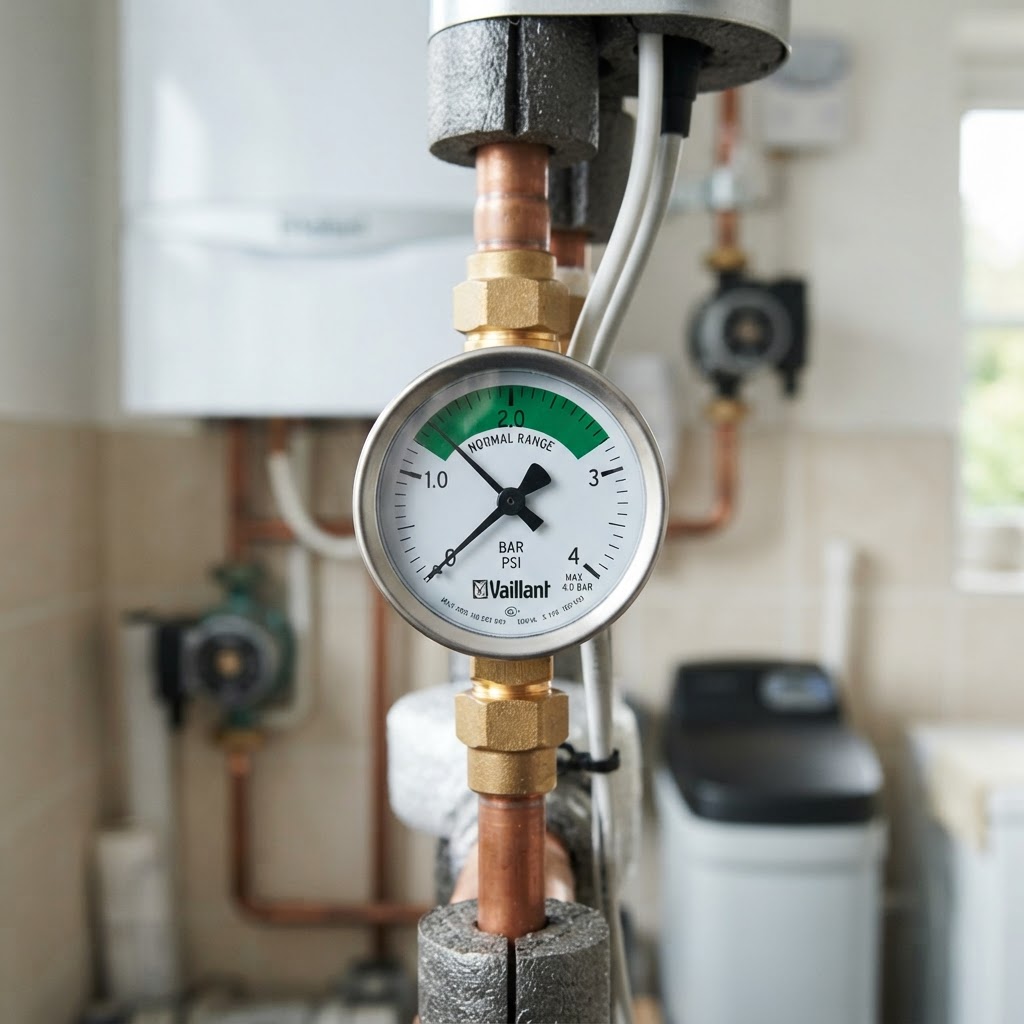
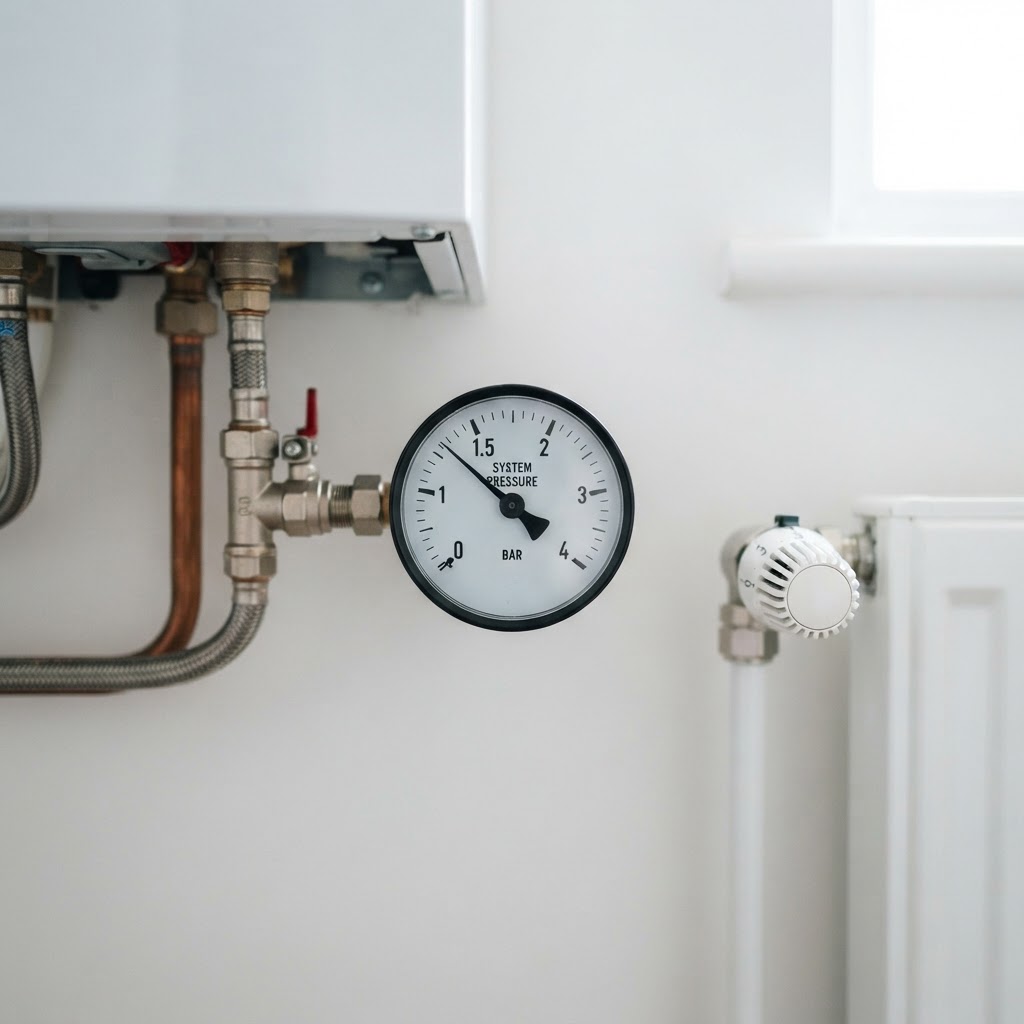
- Check the pressure gauge: Look at the dial or digital reading on the front of your boiler when the system is cold. It should sit comfortably between 1.0 and 1.5 bar. If it has dipped into the red zone below 1 bar, top it up using the external or internal filling loop until it returns to the green zone.
- Feel for cold spots: Once the radiators are hot, carefully run your hand along them. If a radiator is cold at the top but hot at the bottom, trapped air is preventing water from filling the panel. An easy turn with a radiator bleed key will release that air. Remember to recheck your boiler pressure afterwards, as venting air can slightly drop system pressure.
- Inspect thermostatic valves (TRVs): Radiator valves can stick shut after months in one position during summer. Remove the plastic TRV head and gently press down on the exposed metal pin with a flat tool; it should bounce smoothly up and down rather than stay seized in the lowered position.
3. Protect Condensate and Exposed Pipework
One of the most common causes of modern condensing boiler breakdowns during UK cold spells is a frozen external condensate pipe. When acidic condensate water trickles through an uninsulated plastic pipe outside your wall, sub-zero winds can freeze the trickle layer by layer until the pipe blocks completely, causing the boiler to shut down safely on fault.
- Take a look outside where the small white or grey plastic waste pipe exits the brickwork.
- If it is narrow or completely bare, fit waterproof, external-grade foam lagging (available inexpensively from any trade counter or DIY merchant).
- If you have pipes running through unheated spaces such as lofts, cellars, or attached garages, ensure they are snugly wrapped to avoid burst pipes and freezing hazards.
4. Fine-Tune Your Thermostats and Timers
As daylight hours shrink, your daily routine shifts. Modern heating systems run most efficiently when delivering steady, controlled warmth rather than blasts of intense heat.
- Set reasonable comfort levels: According to energy guidance, setting your main room thermostat between 18°C and 21°C provides a comfortable living environment while keeping fuel consumption sensible.
- Adjust schedules for the clocks going back: Ensure digital programmers and smart thermostats reflect the correct time when British Summer Time ends, ensuring your radiators come on 20–30 minutes before your alarm rather than waking up to a cold home.
- Protect vacant rooms: Turn TRVs down to setting 1 or 2 in unused spare rooms or storage areas, and keep interior doors shut to concentrate heat in living spaces.
5. Book an Annual Professional Boiler Service
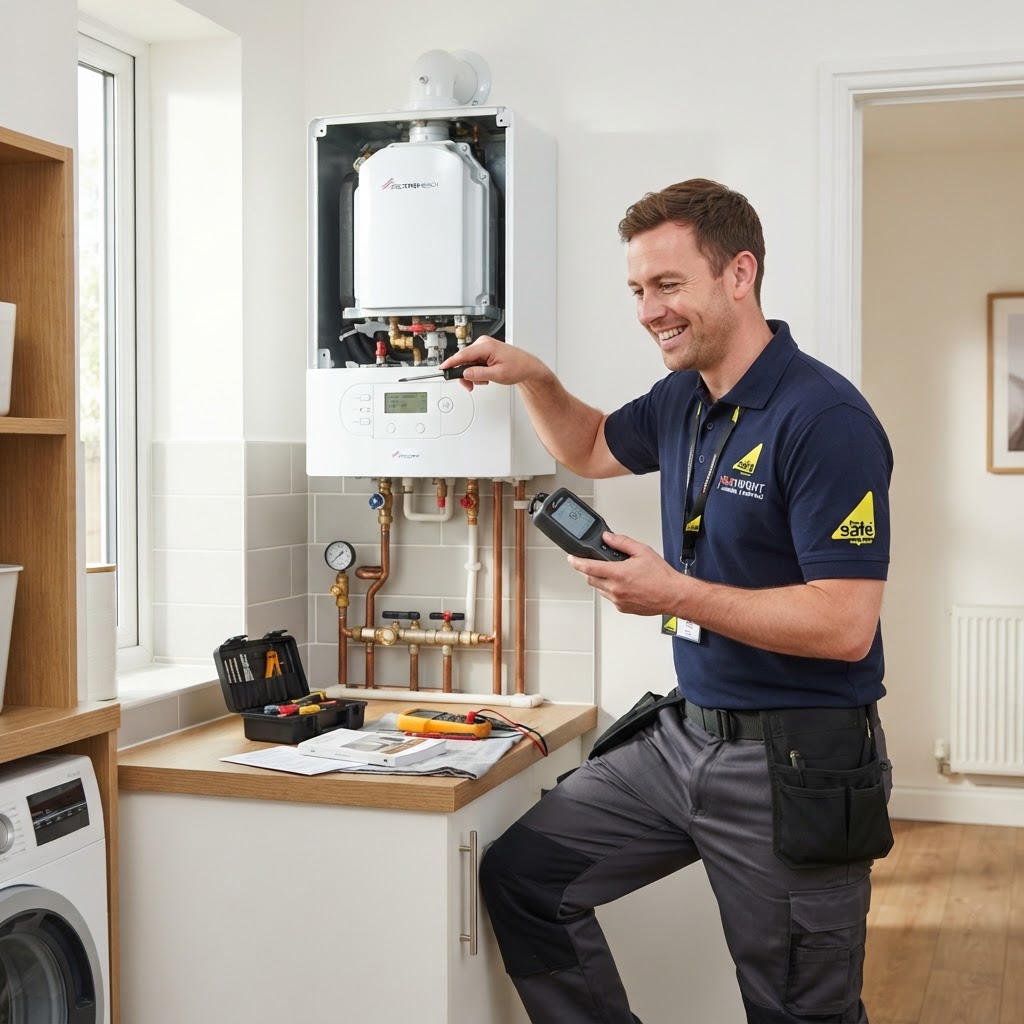
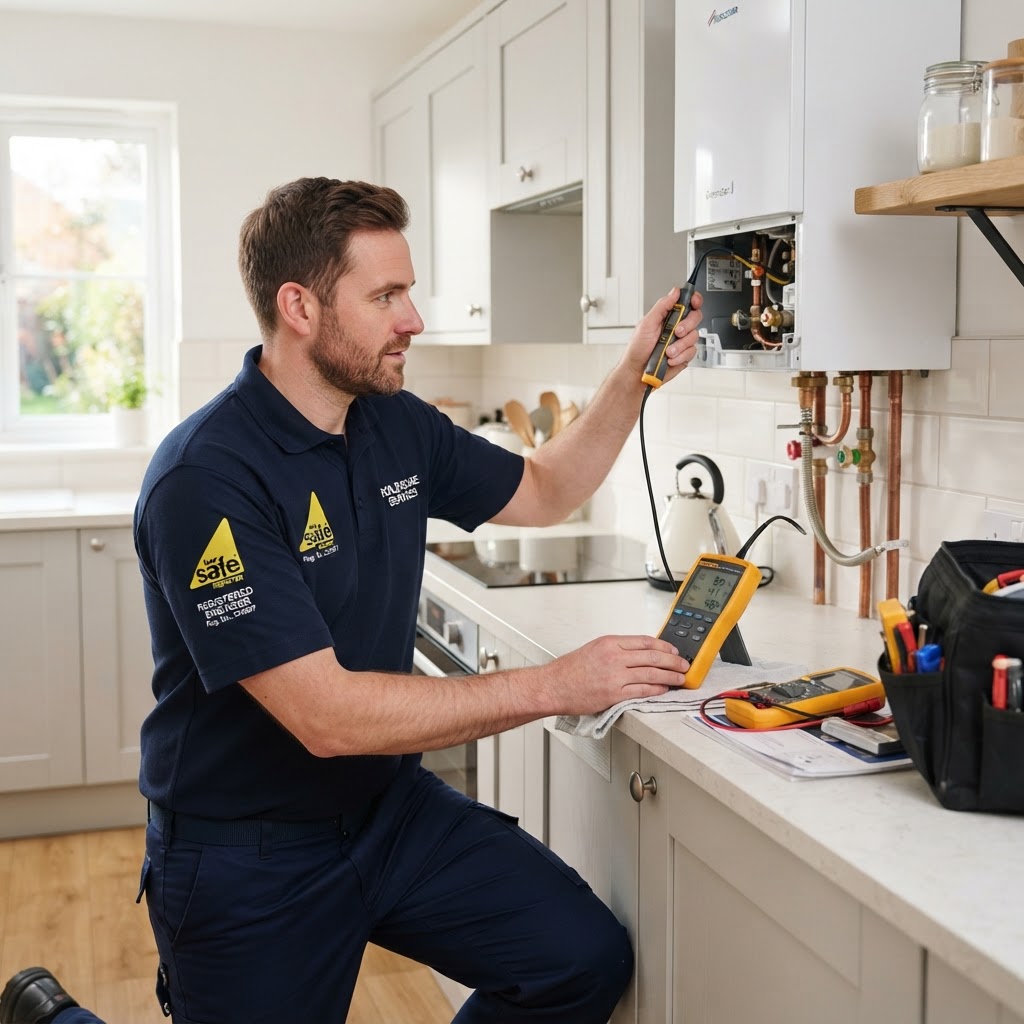
While home checks cover external basics, internal components like the heat exchanger, burner seals, flame sensors, and flue integrity require qualified hands. Manufacturers stipulate an annual service to keep warranties valid, and Gas Safe registered engineers conduct vital flue-gas combustion analyses to ensure your appliance is burning cleanly without producing dangerous carbon monoxide.
Autumn is the ideal time for your annual service, clearing out any soot, checking expansion vessels, and catching worn seals before winter puts maximum strain on your system.
Warm and Prepared for the Months Ahead
A little advance preparation goes a long way towards a cosy, stress-free winter. By testing your controls early, balancing pressure, and protecting vulnerable pipework, you protect both your comfort and your pocket.
If your boiler displays an error code during your autumn test run, your pressure keeps dropping, or your appliance is due its annual safety check, Warren Plumbing & Heating is here to help. Serving homeowners and landlords across Dartford, Bexleyheath, Gravesend, and surrounding Kent areas, our Gas Safe registered engineers provide friendly, dependable service to keep your heating running safely all winter long.